
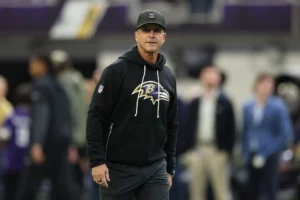
(Photo: Bloomberg)
I remember when John Harbaugh was hired by the Baltimore Ravens after the organization decided to fire Brian Billick following a down season in 2007. The 2008 season marked a new chapter of Ravens football, with a rookie head coach in Harbaugh and a rookie quarterback named Joe Flacco. In their first year together, the Ravens came within one game of reaching the Super Bowl. In 2012, the Ravens went on a memorable postseason run, defeating the Denver Broncos one week and the New England Patriots the following week in the AFC Championship Game, en route to their second Super Bowl title against the San Francisco 49ers. After 18 years with the only team he had ever known, the Baltimore Ravens decided to fire John, a move that shocked everyone—myself included. The moment he was let go, I knew teams with head coaching vacancies would be lining up for his services. One of those teams was the New York Giants. Not anymore. Big Blue has decided to name the veteran coach their next head coach for the 2026 season.
John is one of the six or seven best coaches in the league today, and I saw firsthand what he was able to accomplish in Baltimore over all those seasons. Before getting his first opportunity to lead a team, he served as a special teams coach for the Philadelphia Eagles under Andy Reid. As a head coach, John’s greatest strength is his ability to establish a clear organizational identity. This can be broken down into four parts: 1. who we are as a football team, 2. how we play, 3. what we value, and 4, what is expected of everyone in the organization on a daily basis. During his time in Baltimore, John was able to manage strong personalities and stars such as Ray Lewis, Ed Reed, Terrell Suggs, and most recently Lamar Jackson, who won two league MVP awards under his leadership. The first two names mentioned are owners of the legendary gold jacket as members of the Pro Football Hall of Fame. For many years, the Ravens were viewed as a disciplined, tough, and resilient football team—traits that reflected John’s tone more than any specific scheme. Harbaugh has long been a firm believer in philosophy and structure, something that goes a long way with football teams at any level. He has also emphasized a team-first mentality, where no individual is bigger than the organization. Big names may be one thing, but nobody was exempt from accountability, regardless of status. Another positive trait of John’s is his ability to adapt, something many coaches struggle with as they get older. His teams in Baltimore evolved over time—whether defensively led during the Ray Lewis era, more balanced offensively during the Joe Flacco years, or offense-driven and run-heavy in the Lamar Jackson era. Despite those changes, Ravens teams were consistently tough and hard-nosed, which again reflected Harbaugh’s philosophy. I also appreciated how he allowed evolution without drifting away from the team’s core identity.
The New York Giants have been a dumpster fire for years. Since their last Super Bowl title in the 2011–12 season, they have made the playoffs only twice and have cycled through several head coaches. The decision to let Saquon Barkley walk—only for him to sign with the Philadelphia Eagles—only added to the organization’s struggles. The Giants fired Brian Daboll in season, despite the fact that he won Coach of the Year in his first season with the team. For years, the Giants have hired coaches with little to no head coaching experience. While everyone has to get their start somewhere, having a proven leader can make all the difference. This is a home-run hire for the Giants. They’ve brought in a coach with experience, credibility, and a Super Bowl ring. This has been a team that has lacked discipline for far too long, and now they finally have the right person to restore it.
